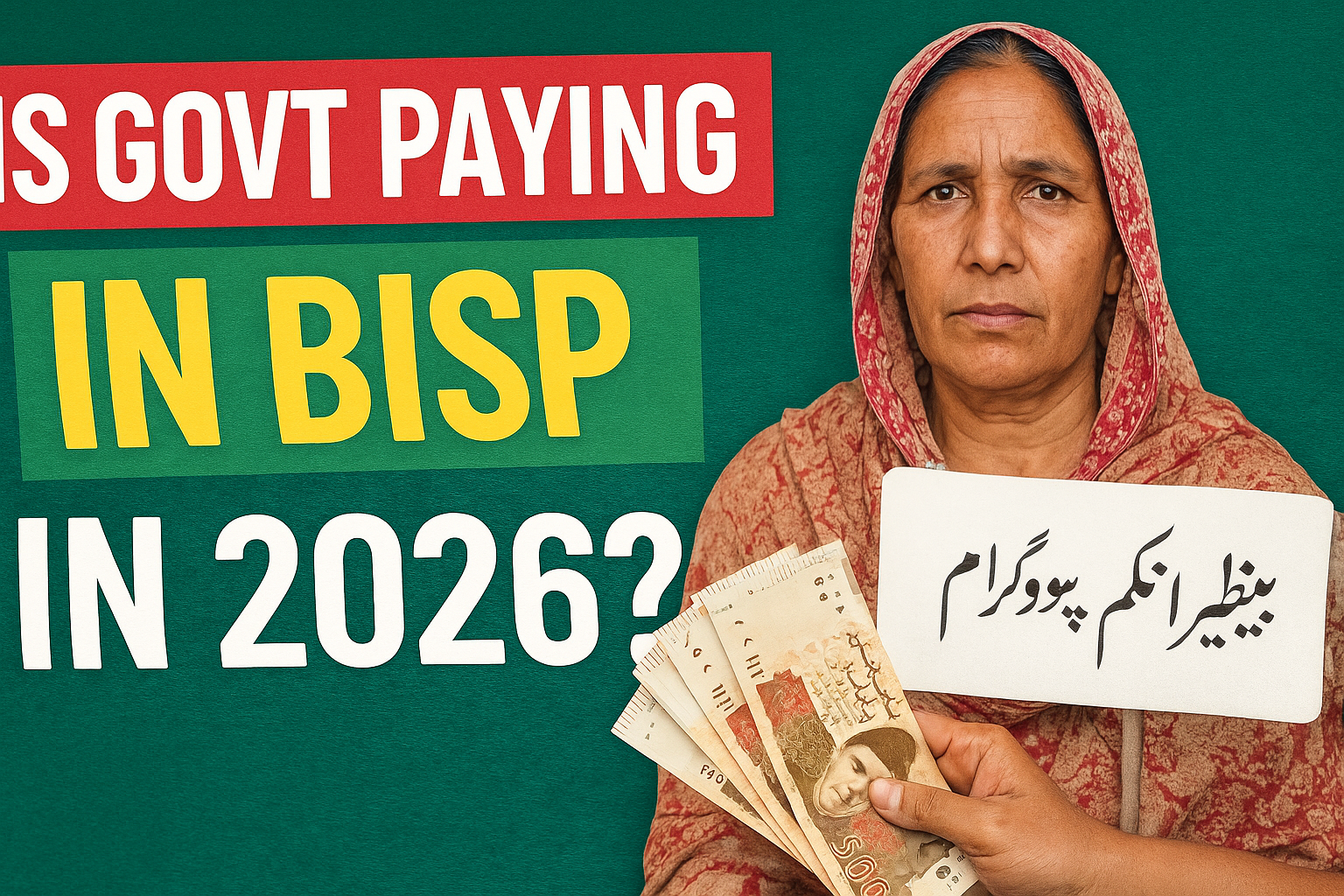
✅ BISP Is Active in 2026 — Payments Are Being Made
-
BISP recently announced that as of January 2026, the quarterly installment under BISP Kafaalat has been raised to Rs 14,500.
-
The Government has reaffirmed its commitment to support low-income and vulnerable families, including women, disabled individuals, and other eligible beneficiaries.
-
Payment cycles for 2025–26 have restarted full-scale. Many beneficiaries who were previously suspended due to outdated data or verification issues have been reactivated after updated checks.
In short: BISP is alive and functioning — but only for citizens whose profiles pass the updated eligibility and verification criteria.
🔍 What’s Changed — New Payment Rules & Verification
Increased Installment
-
The quarterly stipend has been raised from prior amounts (e.g. Rs 13,500 in 2025) to Rs 14,500 in 2026.
-
The increase aims to help families cope with inflation and rising living costs — covering essentials like food, utilities, and healthcare.
Stricter Verification (Dynamic Survey + Biometric Check)
-
In 2024–2025, BISP carried out a dynamic survey to review and re-assess all beneficiary families. Many accounts were suspended if data (e.g. CNIC status, income, household information) was found incomplete or outdated.
-
To ensure ongoing eligibility, beneficiaries must complete the survey and update their records by the set deadline (notably, many sources cite June 30, 2025, as a cutoff) to remain eligible for 2026 payments.
-
Additionally, payments and identity checks now require biometric verification (thumbprint + valid CNIC) at authorized centers or partner banks/agents — to prevent fraud and ensure funds reach rightful recipients.
No Back Payments for Missed Withdrawals
-
A critical update: If a registered beneficiary failed to collect earlier installments on time, those payments will no longer be reimbursed. Only the current and future installments remain payable — provided the beneficiary remains eligible and collects on time.
-
This means timely collection is now more important than ever — delayed withdrawal may result in permanent loss of that tranche.
📲 How to Check BISP Eligibility & Withdraw Payments in 2026
To ensure you receive payments:
-
Check eligibility and payment status — Use SMS method: Send your 13-digit CNIC (without dashes) to 8171. You will get a reply confirming your status. Visit authorized collection centers — Payments are disbursed via BISP camps, partner banks (e.g. HBL, Bank Alfalah), or mobile payment agents with biometric verification.
-
Ensure your personal data is up to date — Valid CNIC, updated household income/status, and completion of any survey (like NSER/dynamic survey) required for continued eligibility.
-
Withdraw payments promptly — Because missed payments are not retrievable, make sure to collect as soon as SMS confirms funds are available.
⚠️ What You Should Know — Eligibility & Disqualification Factors
Not every applicant automatically gets BISP funds. Key eligibility conditions and disqualifiers include:
-
Families must have a poverty score under the defined threshold (PMT score under a cutoff) based on NSER assessment; higher income or assets can disqualify households.
-
Typically, beneficiaries are female-headed households, or women/families who meet the criteria set by BISP (widows, disabled, low-income female heads).
-
Government employees, pensioners, or families with significant property/land holdings are often excluded.
-
Holding valid CNIC, being registered in the NSER database, and not possessing disqualifying assets like large properties or formal employment are necessary conditions.
Also, the dynamic survey and re-verification process in 2024–25 led to temporary suspensions for many — meaning previously eligible families had to reconfirm their status.
📈 What It Means for Beneficiaries in 2026
-
For eligible and verified families: Yes, BISP is paying — the increased quarterly stipend of Rs 14,500 offers some relief amid inflation.
-
For those re-verifying or whose data was outdated: There’s still hope — many had their benefits restored in late 2025 after completing the survey and updating records.
-
Missed payments = lost payments — if a recipient fails to collect in time, those funds are canceled; only future tranches will be available.
-
Transparency and biometric verification are now the norm, reducing fraud, but also requiring beneficiaries to cooperate actively and maintain valid documentation.
📝 What You Should Do — Checklist for Current & Prospective Beneficiaries
-
Verify your CNIC & household data — make sure NSER and NADRA records are updated, especially after migrations, births, or changes in household size.
-
Complete the dynamic survey (if prompted) — surveys in 2024–2025 were critical for retaining eligibility. If you missed them or haven’t updated data, check with your local BISP office immediately.
-
Check your status via SMS (8171) regularly — this remains the official method to know whether you’re eligible and when payments are released.
-
Withdraw payments promptly once notified — don’t delay; missed installments are not recoverable.
-
Avoid middlemen or unofficial agents — BISP warns that all services are free; if someone demands money to “help you get BISP,” it’s likely a scam.
🧑💡 Final Verdict: BISP Is Paying — But Only for Eligible & Verified Beneficiaries
Yes — in 2026, the Government of Pakistan is paying out funds under the BISP, and there have been several improvements: higher payment amounts, more secure and biometric-based distribution, and stronger oversight. For many low-income families, this support remains a critical lifeline.
However, it is no longer an automatic hand-out. The government has raised the bar: your CNIC must be valid, data up-to-date, verification complete, and payments must be collected on time. Families unable to meet these requirements may lose access — permanently, for missed installments.
If you’re a current beneficiary — double-check your 8171 SMS, visit your nearest payment center without delay, and ensure your documentation is valid. If you were previously suspended — now might be the time to re-verify your details and re-register.
In a country grappling with inflation and economic hardship, BISP 2026 remains active — but only as long as the system ensures fairness, verification, and timely disbursement.
If you like, I can also provide a step-by-step guide to check BISP eligibility/status, and a list of official contact numbers/URLs to help beneficiaries avoid scams.